10 kW solar system price in Melbourne
A standard 10 kW system averaged $8,870 installed in Melbourne on 1 November 2026, after the federal solar discount. A premium one averaged $10,330.
- Standard 10 kW, installed
- $8,870
- Premium 10 kW, installed
- $10,330
- Victorian rebate
- Up to $1,400
- Panels on a 10 kW inverter
- Up to 13.3 kW
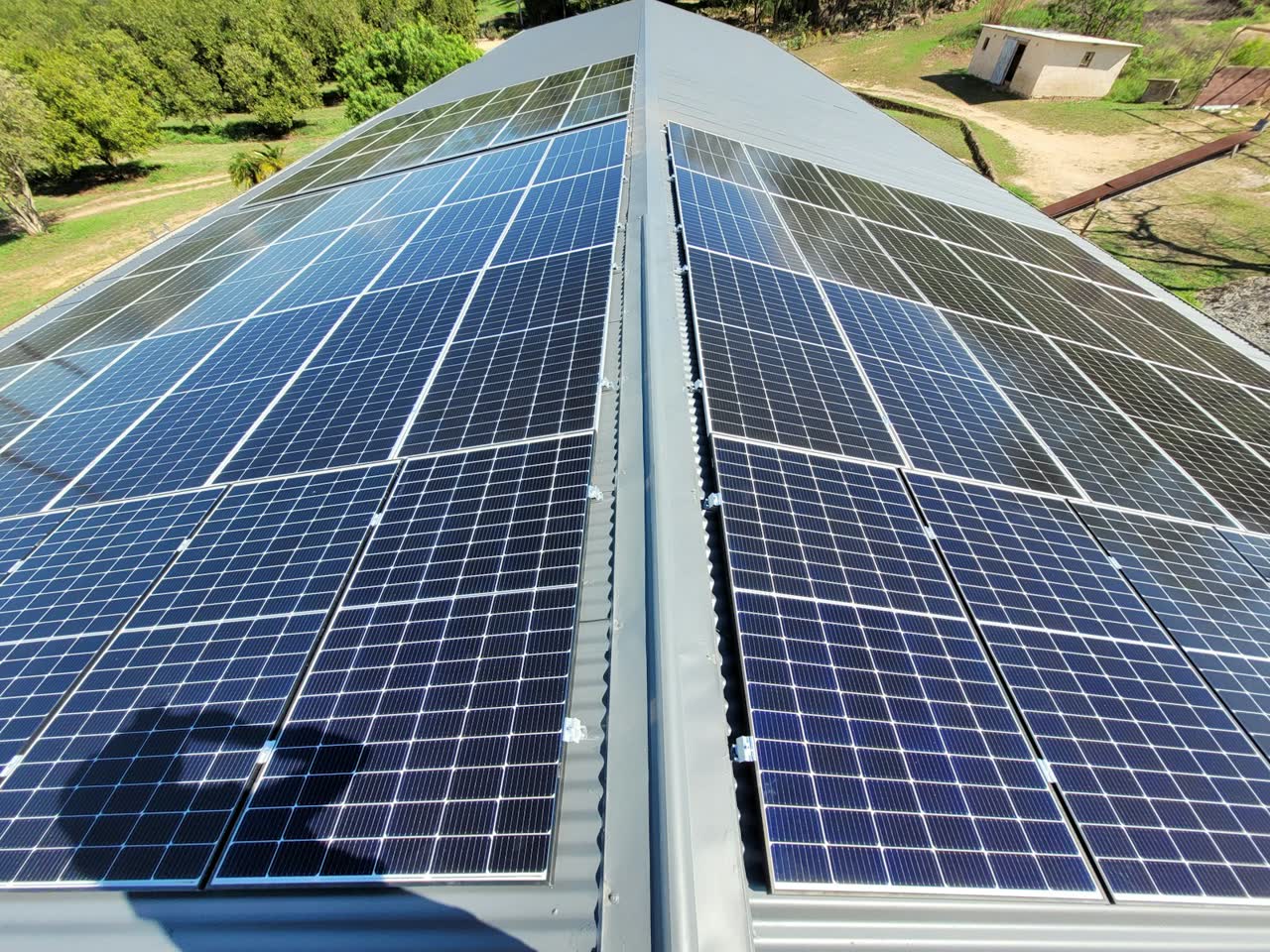
What a 10 kW system costs
These are average installed prices in Melbourne from the Solar Choice price index. They include GST and already take off the federal solar discount (small-scale technology certificates, or STCs). They don't take off the Victorian rebate.
| System | Standard | Premium | Standard, per watt |
|---|---|---|---|
| 6 kW | $5,750 | $6,660 | about 96c |
| 10 kW | $8,870 | $10,330 | about 89c |
The per-watt figure is the standard price divided by the size: $8,870 for 10,000 watts is about 89c a watt. Part of every job costs about the same at any size, such as the call-out, the paperwork and the connection. So each extra kilowatt adds less to the bill.
Your own price depends on your roof, your switchboard, your network and the panels and inverter you pick. A written quote from Winki Energy is for your home. See solar panels for what an install involves.
13.3 kW of panels on a 10 kW inverter
The rules let panels run up to a third larger than the inverter. A 10 kW inverter can take up to 13.3 kW of panels. The extra panels lift output in the morning, the late afternoon and on cloudy days, when the inverter has room to spare.
Solar Choice says home panels are now commonly 440 to 475 watts. At that size a 10 kW array is about 21 to 23 panels, and 13.3 kW is about 28 to 30 (13,300 watts divided by 475 or 440 watts a panel). Check that your roof has the space on faces that get sun.
The index prices a 10 kW system. A 13.3 kW array on the same inverter adds the extra panels and their mounting. Ask for both sizes on one quote, and read the 13 kW price page before you decide.
Who a 10 kW system suits
A 10 kW system makes the most sense in a home that uses a lot of power during the day, or plans to. These are the usual reasons to size up from 6.6 kW.
- An electric car that charges at home in the middle of the day. See EV charger installation costs.
- A heat pump hot water system set on a timer to heat the tank while the panels produce. See heat pump hot water costs.
- A battery. A bigger system has more spare power to fill it during the day. See solar and battery package prices.
Export limits on your network
Your electricity network sets how much power you can send back to the grid. At midday a 10 kW system can make far more than a home uses, so the limit matters more than on a small system.
- CitiPower and Powercor offer flexible exports from 1 July 2026 to sites that would otherwise get 0 kW. These sites can export up to the size of their inverter, to a maximum of 10 kW, most of the time.
- AusNet offers up to 5 kW per phase on a flexible limit, against 1.5 kW on a fixed one.
Power you export may earn very little: see feed-in tariffs in Victoria. A limit costs you less when you use the power at home. Winki Energy checks your network's limit before quoting.
The rebate and the 2027 change
Solar Victoria pays a rebate of up to $1,400 on solar panels, with an optional interest-free loan of up to $1,400. Your household income must be under $150,000 a year, and applications close on 30 June 2027. See the Solar Homes rebate.
On 1 January 2027 the federal discount drops by about a fifth, as the years left until 2030 fall from five to four. The discount grows with system size, so the cut costs more on a 10 kW system than on a 6.6 kW one.
Common questions
How much is a 10 kW solar system in Melbourne?
A standard 10 kW system averaged $8,870 installed on 1 November 2026 and a premium one $10,330, after the federal discount and before the Victorian rebate.
How many panels is a 10 kW system?
With panels of 440 to 475 watts, a 10 kW array is about 21 to 23 panels. With 13.3 kW of panels on a 10 kW inverter it is about 28 to 30.
Can I export everything a 10 kW system makes?
That depends on your network's export limit. CitiPower, Powercor and AusNet offer flexible limits to some homes. Winki Energy checks yours before quoting.
Will a 10 kW system cost more in 2027?
Likely. The federal discount shrinks by about a fifth on 1 January 2027, and on a 10 kW system that is a bigger sum than on a smaller one.
Sources
- Solar Choice, solar power system prices, index of 1 November 2026
- Solar Victoria, apply for a solar panel rebate, updated 16 November 2026
- Powercor, flexible exports, read 23 November 2026
- AusNet, flexible exports, read 23 November 2026
- Clean Energy Regulator, STC entitlements, read 23 November 2026